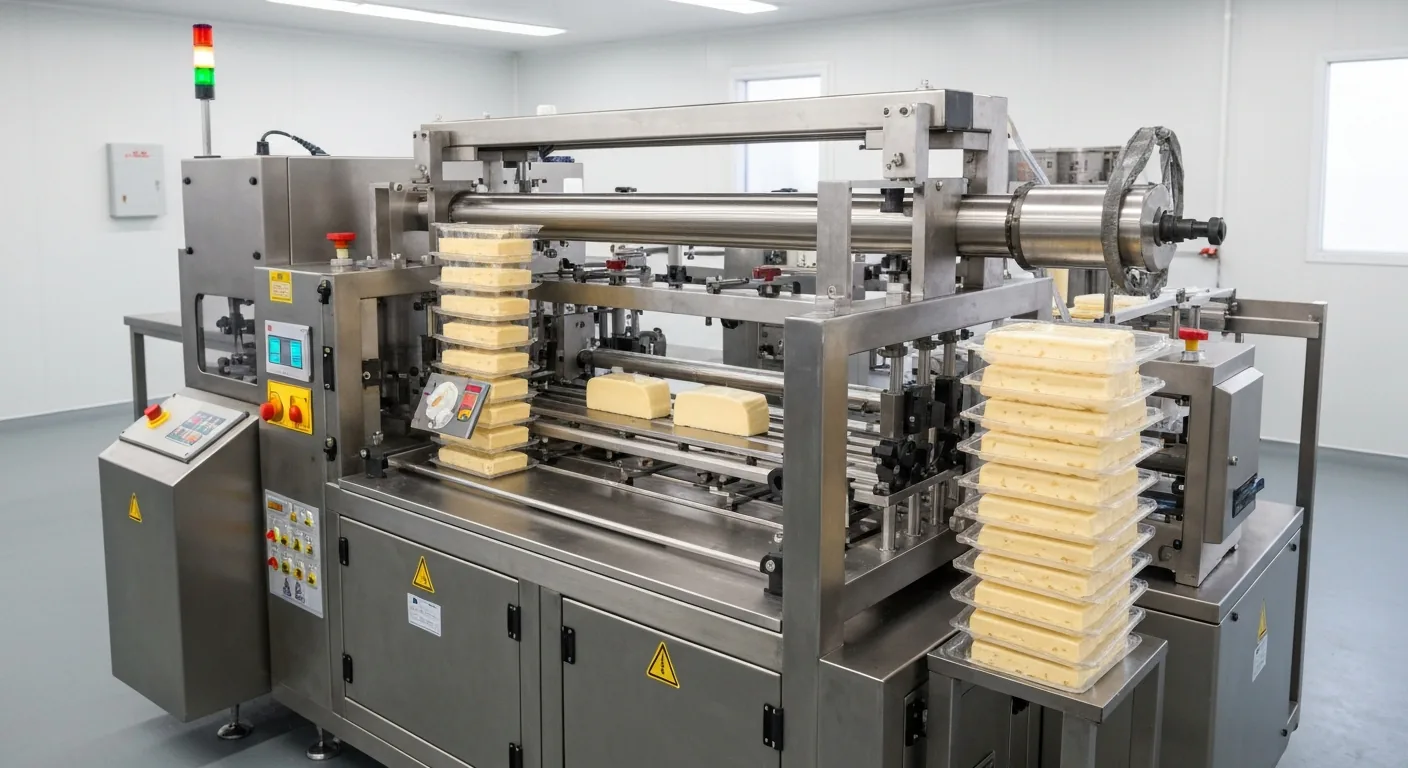
Cheese is one of the most complex categories for packaging engineers. The enormous variation in moisture content, fat level, rind type, and microbial activity across different cheese varieties means there is no single packaging solution that works for all products. Thermoform packaging — used either with vacuum or MAP gas flushing — has become the dominant format for sliced, portioned, and block cheeses in both retail and foodservice supply chains.
This guide walks through the key decisions: when to use MAP vs vacuum, which films suit which cheese type, and which Pipak machine configuration delivers the right balance of throughput and flexibility for dairy operations.
Cheese Categories and Their Packaging Requirements
Understanding the biology of each cheese type is the starting point for any packaging decision. The key variables are moisture content (which determines gas permeability and mold risk), CO₂ production by residual cultures, and whether the rind is a functional part of the product.
| Cheese Type | Moisture | Recommended Method | Target Shelf Life |
|---|---|---|---|
| Kashar (hard, sliced) | 30–38% | Vacuum or MAP (N₂ flush) | 60–90 days |
| White cheese (beyaz peynir) | 45–55% | Vacuum or brine-pack thermoform | 30–60 days |
| Mozzarella (fresh) | 52–60% | MAP: CO₂/N₂ 30/70 | 21–28 days |
| Processed cheese slices | 40–48% | MAP: N₂ 100% or CO₂/N₂ | 90–120 days |
| Cream / soft cheese | 60–70% | MAP: CO₂/N₂ 40/60 | 28–42 days |
| Aged hard block (parmesan style) | 20–28% | Vacuum | 120–180 days |
MAP vs Vacuum: Which Is Right for Cheese?
Both methods extend shelf life significantly compared to conventional air packaging, but they work differently and produce different results on the shelf.
Vacuum Packaging
Vacuum removes practically all air from the pack, creating a tight skin around the product. This is ideal for dense, firm cheeses like aged kashar or hard block cheeses where shape is well-defined and the product can withstand compression without visual damage. Vacuum is simpler to operate, uses thinner films, and has lower gas cost (no gas purchase required). The downside: the tight film can cause surface marking on soft cheeses, and vacuum packs can look less appealing on the retail shelf compared to pillow-pack MAP formats.
MAP for Cheese
MAP replaces pack atmosphere with a controlled gas blend, leaving the product in a cushioned gas environment. For fresh and semi-soft cheeses — mozzarella, cream cheese, soft white cheese — MAP preserves shape and appearance significantly better. CO₂ at 30–40% inhibits mold and yeast growth on the cut surface, while N₂ acts as a neutral filler. For sliced processed cheeses, 100% N₂ flushing prevents inter-slice sticking and maintains the stacked presentation consumers expect.
The critical consideration with MAP for cheese: some live-culture cheeses (e.g., certain blue cheeses, washed-rind varieties) continue producing CO₂ after packaging. This gas buildup can over-pressurize the pack. For these products, micro-perforated films or specifically designed gas-permeable lid films must be used — or the product must be stabilized before packaging.
Film Selection for Thermoform Cheese Packaging
Film choice is as critical as gas mixture. The wrong film can allow oxygen ingress, cause condensation, or produce an unacceptable appearance at point of sale.
- PA/PE multilayer (70–120 µm): High oxygen barrier, excellent formability. Standard for vacuum-packed kashar and block cheeses. OTR typically 10–20 cm³/m²/day.
- EVOH/PE multilayer (80–100 µm): Superior gas barrier (OTR <3 cm³/m²/day). Recommended for long shelf-life MAP cheese packs.
- PP-based rigid tray (250–350 µm): Used as bottom web for portion-pack formats. Good rigidity, microwaveable variants available.
- Antifog lidding film: Essential for soft and fresh cheeses with high surface moisture. Prevents condensation on the inside of the lid, maintaining visual appeal at the chiller cabinet.
- Peelable seal: For retail consumer packs, peel force should be 4–8 N/25 mm for reliable opening without tearing the tray.
Thermoform Machine Configuration for Dairy Operations
Pipak machines support both skin-pack (vacuum) and MAP gas-flush configurations on the same hardware platform, which is a key advantage for cheese producers handling multiple product lines. Switching between vacuum and MAP requires only a valve configuration change and film swap — no mechanical tooling change is needed on the PPM π-33 MIDI and larger models.
For sliced cheese operations where throughput is critical — for example, 200g consumer packs of kashar at retail — the π-33 MAX running at 10–12 cycles per minute with a 4-up forming tool delivers approximately 2,400–2,880 packs per hour. For premium soft cheese in tray format (e.g., 150g cream cheese), the MINI PACK model provides the compact footprint suited to smaller production volumes without sacrificing seal quality.
Temperature control of the forming station is particularly important for cheese packaging. Rigid APET trays form optimally at 100–120°C forming temperature with 0.6–0.8 bar forming pressure. Sealing station temperature for PA/PE lid films should be maintained at 140–160°C with a dwell time of 0.8–1.2 seconds for consistent hermetic seals.
Shelf Life Validation and Quality Control
Before committing to a packaging configuration for a new cheese product, shelf life validation trials are essential. A minimum validation protocol should include:
- Headspace gas analysis at Day 0, Day 7, Day 14, and Day 21 — to confirm gas mixture stability and detect any seal integrity issues
- Microbiological testing at end of declared shelf life — yeast, mold, total viable count, and relevant pathogens
- Sensory evaluation — texture, aroma, color, and surface appearance at regular intervals
- Pack integrity testing — bubble test or dye penetration at production start and end of each run
Pipak's technical team can provide guidance on validation protocols and supports on-site trials for customers commissioning new packaging lines for dairy applications.
Frequently Asked Questions
Can kashar cheese be packaged under MAP instead of vacuum?
Yes. A N₂-only flush (100% N₂) or CO₂/N₂ blend (20/80) works well for sliced kashar, particularly in retail pillow-pack formats where a cushioned presentation is preferred. Vacuum remains more common for block kashar due to lower film and gas costs at scale.
What causes white spots or surface drying on vacuum-packed cheese?
White surface spots on vacuum-packed cheese are typically caused by micro-leaks allowing a small amount of oxygen into the pack, or by condensation cycles during cold chain transit. Ensuring a consistent 6 mm seal width and using a high-barrier PA/PE film resolves most cases. If the issue persists, the forming tool depth should be checked for dimensional drift.
How do you package cheese in brine (white cheese in liquid)?
Thermoform machines can fill and seal cheese trays with brine liquid using an inline liquid dosing unit mounted between the forming and sealing stations. The bottom web tray must have sufficient depth (typically 50–80 mm) and the lid film must provide a robust hermetic seal resistant to hydrostatic pressure. Pipak's π-33 MAX supports liquid dosing integration as a factory-fitted option.
What is the minimum production volume that justifies a thermoform machine for cheese?
For dedicated cheese packaging, a production volume of approximately 200–300 packs per hour already justifies entry-level thermoform automation (π-11 MINI MAX), particularly when hygiene, consistency, and labeling requirements are factored in. Manual cling-film wrapping at this volume introduces too many quality variables for retail-grade supply.