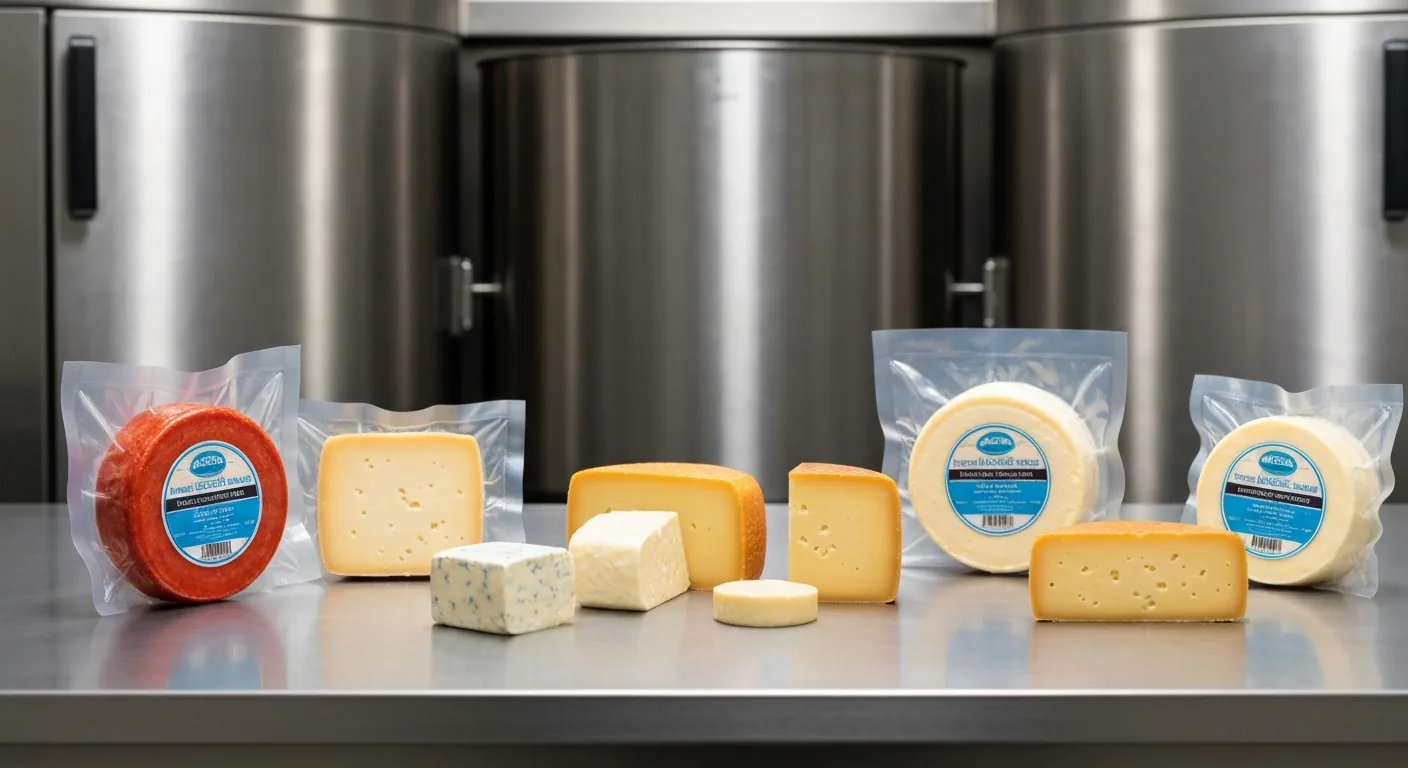
For dairy manufacturers exporting to international markets, packaging technology directly determines shelf life, logistics capabilities and ultimately profitability. This guide compares MAP and vacuum packaging to help you make the right investment decision.
What Is MAP (Modified Atmosphere Packaging)?
MAP replaces the air inside a package with a controlled gas mixture — typically CO₂ and N₂. CO₂ inhibits mold and aerobic bacteria while N₂ acts as an inert filler. For cheese, this can extend shelf life from 30-45 days up to 90-120 days.
How Vacuum Packaging Works
Vacuum packaging removes all air from the package, creating an oxygen-free environment that slows aerobic bacterial growth. It is simpler and less expensive than MAP but offers lower shelf life extension for most dairy products.
Side-by-Side Comparison
| Factor | Vacuum | MAP |
|---|---|---|
| Shelf life extension | 2–3× standard | 3–5× standard |
| Visual presentation | Product compressed | Product shape preserved |
| Investment cost | Lower | Higher (gas supply needed) |
| Best for export | Moderate distances | Long-distance / overseas |
Which Is Right for Your Product?
- Hard cheese blocks: Vacuum is sufficient and cost-effective
- Sliced cheese retail packs: MAP strongly recommended for presentation and shelf life
- Fresh white cheese: MAP with 30-40% CO₂ + 60-70% N₂ is ideal
- Yogurt and cream products: FFS (Form-Fill-Seal) is the preferred solution
Conclusion
MAP offers superior shelf life and presentation for retail dairy products. For producers targeting export markets — especially the Middle East and Gulf region — MAP technology is increasingly a competitive necessity.
Frequently Asked Questions
Can MAP packaging be used for liquid dairy products?
Yes. FFS (Form-Fill-Seal) machines with gas injection are used for yogurt, ayran and liquid products. The technology differs slightly from thermoform MAP for solid products.
What gas ratio is best for feta cheese?
A mixture of 30-40% CO₂ and 60-70% N₂ is commonly used for white/feta cheese. The optimal ratio depends on moisture content and salt level.