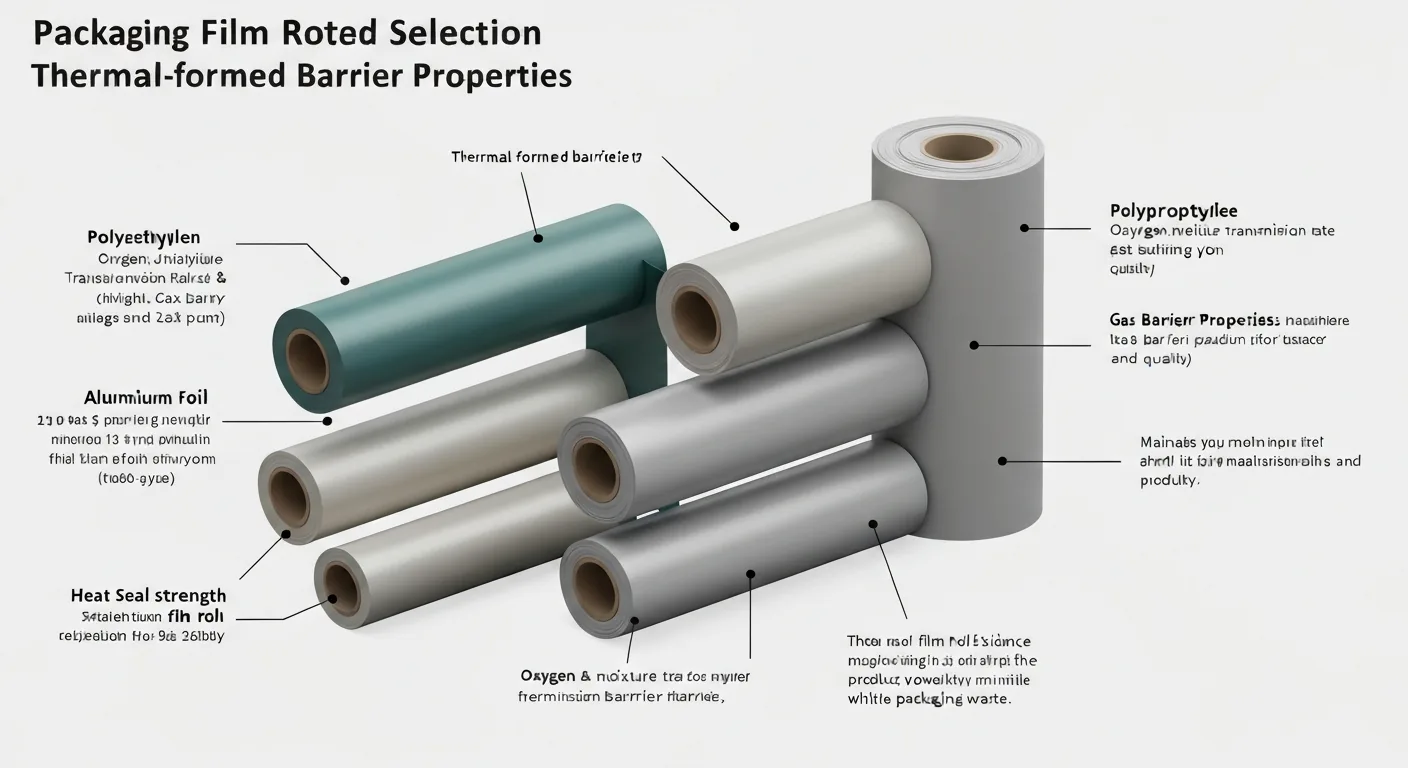
The thermoforming machine is only half the equation. The packaging film you select determines seal integrity, barrier performance, shelf life and ultimately the product's visual appeal on the retail shelf.
Bottom Film: Forming Films
The bottom film must have sufficient formability to deep-draw into mould cavities without tearing. Common materials:
- PA/PE (Nylon/Polyethylene): Excellent formability and barrier, standard for meat and cheese
- PET/PE: Stiffer, better for rigid trays, lower formability
- PP: Good for higher-temperature products, microwave-safe options available
Top Film: Lidding Films
Lidding film must seal cleanly to the bottom film and provide the specified barrier. Key properties to specify:
- OTR (Oxygen Transmission Rate): lower = better barrier
- WVTR (Water Vapour Transmission Rate): critical for cheese and dry products
- Peel force: easy-peel for consumer convenience
Barrier Levels for Common Products
| Product | OTR Target (cc/m²/day) | Recommended Film |
|---|---|---|
| Fresh meat | < 5 | PA/EVOH/PE |
| Cheese | < 10 | PA/PE high barrier |
| Cooked products | < 20 | Standard PA/PE |
| Olives/Pickles | < 15 | PA/PE or PP barrier |
Frequently Asked Questions
Can I use any film brand with a Pipak Makina machine?
Yes. Pipak machines are compatible with standard film specifications from all major suppliers. We can provide film width and thickness specifications for each model.
What film thickness is standard for thermoforming?
Bottom film is typically 60-200 microns depending on forming depth. Top film ranges from 50-100 microns. Pipak Makina's technical team can advise on your specific requirements.