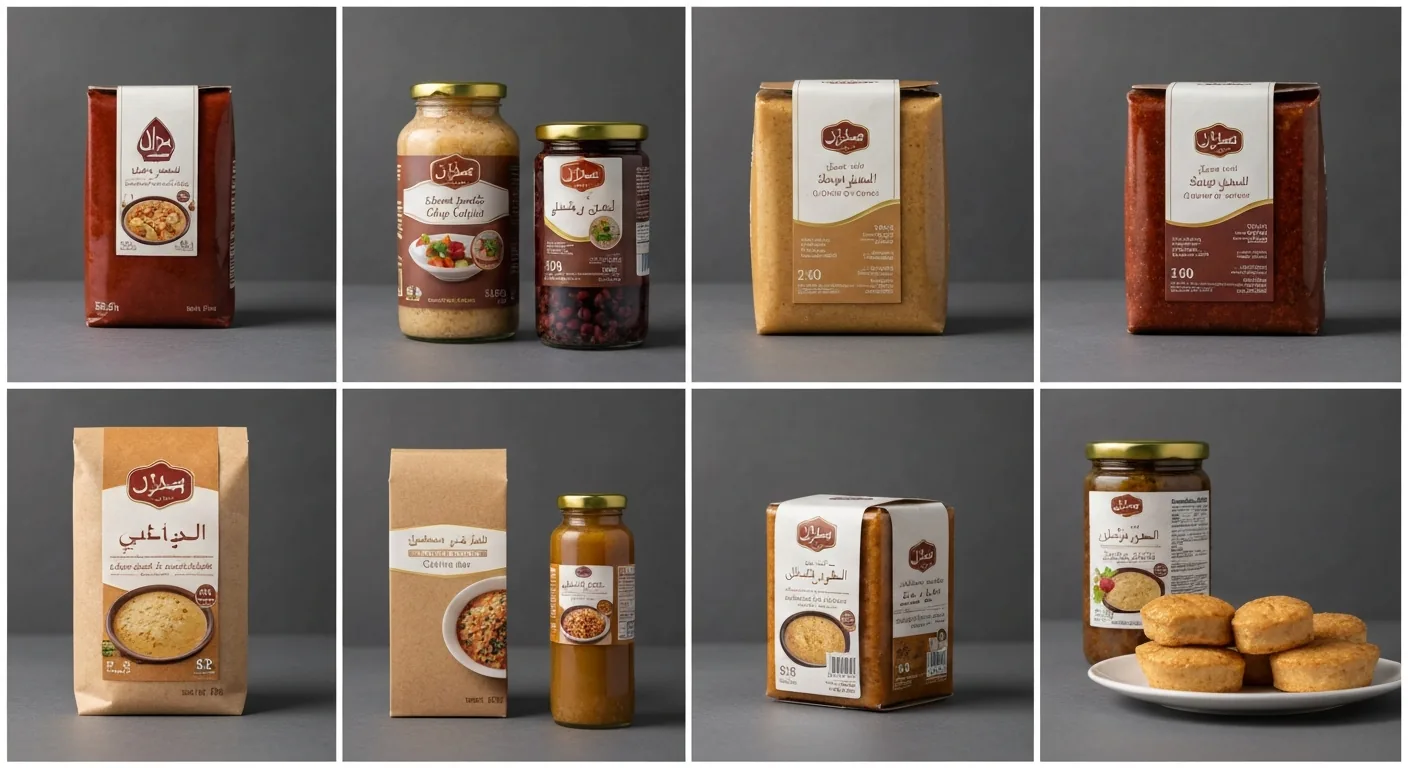
The Gulf Cooperation Council (GCC) and broader Middle East region represent one of the most important export markets for Turkish food producers. Saudi Arabia, the UAE, Qatar, Kuwait, Bahrain, and Oman together import billions of dollars of processed and packaged food annually — and Turkey, with its geographic proximity, established trade relationships, and competitive production costs, is a major supplier across categories including dairy, meat, olives, olive oil, sauces, and ready meals.
However, exporting food to the Gulf is not simply a matter of putting existing domestic packaging on a pallet. The region has specific and strictly enforced packaging, labelling, halal, and shelf life requirements that differ significantly from EU or domestic Turkish standards. Non-compliant shipments are rejected at customs — a costly outcome that can be avoided entirely with the right preparation.
The GSO Framework: What It Is and Why It Matters
The Gulf Standards Organisation (GSO) is the regional standards body for the GCC, setting technical regulations for food safety, packaging, and labelling that member states implement into national law. Key GSO standards relevant to food packaging include:
- GSO 9:2013 — General requirements for pre-packaged foodstuffs (labelling)
- GSO 1016 — Food additives permitted in GCC markets
- GSO 2055-1 — Halal food requirements (Part 1: General)
- GSO 2055-2 — Halal food requirements (Part 2: Slaughtering)
- GSO 150-2 — Microbiological criteria for food products
Individual GCC countries may apply additional national regulations on top of GSO standards. Saudi Arabia (SFDA — Saudi Food and Drug Authority) and the UAE (ESMA — Emirates Authority for Standardisation and Metrology) both publish country-specific requirements that exporters must verify before shipment.
Halal Certification: Packaging Implications
Halal compliance is not limited to the food product itself — it extends to the packaging materials. This is a point frequently overlooked by exporters focused solely on ingredient and process certification. The key packaging-related halal requirements are:
- No animal-derived additives in packaging films: Certain plasticisers and slip agents used in food-grade films are derived from animal fats (including pork-derived stearates). For GCC export, film suppliers must confirm in writing that no haram-source additives are used in the film formulation.
- Ink and adhesive compliance: Printing inks on primary packaging (that contacts food) and adhesives in laminate film structures must be free from alcohol-based solvents and animal-derived components. Water-based inks are preferred.
- Halal logo placement: The halal certification mark (from a GCC-recognised certifying body) must appear clearly on the primary consumer pack. Logos from non-recognised bodies are not accepted. Turkey's GIMDES, Kalder, and TSE halal certifications are recognised in most GCC states, but verification with the importing country's customs authority is recommended before printing packaging artwork.
Labelling Requirements for GCC Food Exports
Under GSO 9:2013 and country-specific implementing regulations, the following information must appear on all pre-packaged food sold in GCC markets. Arabic language is mandatory on all consumer packs; English may appear alongside Arabic but cannot replace it.
| Required Label Element | Requirement | Notes |
|---|---|---|
| Product name | Arabic + English | Must be the true product name, not a brand name alone |
| Ingredient list | Arabic mandatory | Descending order by weight; additives by function + E-number |
| Net weight / volume | Metric units (g, ml, kg, L) | Dual metric/imperial not required but common |
| Country of origin | Mandatory | "Made in Turkey" or "Product of Turkey" — Arabic translation required |
| Best before / use by date | Day/Month/Year format | Some countries require remaining shelf life on import — see below |
| Storage conditions | Arabic mandatory | Temperature and handling instructions |
| Manufacturer name and address | Mandatory | Importer's address may also be required in destination country |
| Halal mark | Mandatory for meat, poultry, dairy (varies by country) | Must be from a recognised certifying body |
| Nutritional information | Mandatory in UAE, Saudi Arabia | Per 100g and per serving; energy in kcal and kJ |
| Allergen declaration | Mandatory | 14 major allergens; bold or contrasting text in ingredient list |
Remaining Shelf Life Requirements at Import
GCC customs authorities enforce minimum remaining shelf life (MRSL) requirements at the point of import. Products arriving with insufficient remaining shelf life are rejected and returned or destroyed. The general requirements are:
- Saudi Arabia (SFDA): Minimum 50% of total declared shelf life must remain at point of import for most food categories. For products with a shelf life under 6 months, at least 3 months must remain.
- UAE: Minimum one-third of total shelf life remaining, or a minimum of 3 months — whichever is greater — for most packaged foods.
- Kuwait, Qatar, Oman, Bahrain: Generally 50% MRSL, though specific category exemptions apply.
This has direct implications for packaging decisions. A product with a 60-day shelf life under standard MAP conditions may not satisfy Saudi SFDA requirements (30 days remaining needed) if transit time is 10–15 days. Extending shelf life through optimised MAP gas mixture, high-barrier film selection, or switching from chilled to ambient shelf-stable packaging may be necessary to meet MRSL while maintaining commercial viability.
Packaging Material Safety: SFDA and ESMA Requirements
Both SFDA and ESMA require that food contact packaging materials comply with either EU Regulation (EC) No 10/2004 (plastics in contact with food) or equivalent national standards. In practice, this means:
- Packaging films must have a Declaration of Compliance (DoC) from the film manufacturer confirming compliance with food contact migration limits
- The DoC should specify the food categories (aqueous, fatty, acidic, dry) and temperature conditions under which the film is compliant
- Films used for fatty or acidic foods (olive oil, tomato products, dairy) must be tested for specific migration of relevant substances (e.g., ATBC plasticiser in PVC-based films)
Pipak's standard thermoform film partners provide full food contact compliance documentation for all film structures used on Pipak machines. When supplying packaging lines for GCC export customers, Pipak includes film specification recommendations that meet both EU and GCC food contact requirements.
Practical Checklist for GCC Export Packaging Compliance
- Obtain halal certification from a GCC-recognised Turkish body (GIMDES, TSE, or equivalent) — confirm acceptance with the specific importing country
- Commission Arabic language artwork translation and legal review by a qualified food regulatory consultant in the target market
- Obtain a Declaration of Compliance for all packaging films from your film supplier
- Calculate MRSL for your product given expected transit and distribution times — adjust packaging/shelf life specification if needed
- Verify nutritional panel format meets SFDA/ESMA requirements (format differs from EU Regulation 1169/2011)
- Register the product with SFDA (for Saudi Arabia) or notify ESMA (for UAE) before first shipment — registration timelines can be 4–12 weeks
- Ensure outer case labelling also includes Arabic product name and country of origin
Frequently Asked Questions
Do all food products exported to GCC require halal certification?
Not universally, but in practice, most processed food categories — particularly meat, poultry, dairy, and any product that could contain animal-derived ingredients — require halal certification for GCC market entry. Plant-based products, raw vegetables, and grains may be exempt in some GCC states, but it is strongly advisable to obtain certification regardless to avoid customs delays and to meet retailer requirements in the destination market.
Can we print Arabic labels as an adhesive sticker over existing packaging?
Sticker over-labelling is technically permitted for small-volume trial shipments in some GCC markets, but most major retailers and importers require printed Arabic on the primary pack. Stickers are prone to removal, damage, or misapplication, which creates liability. For regular commercial export, printing Arabic on the primary packaging artwork is strongly recommended and in some categories (e.g., infant formula) is mandatory.
Does the type of packaging affect customs clearance speed in GCC ports?
Packaging type itself does not directly affect clearance speed, but documentation completeness does. Products in MAP or vacuum thermoform packaging may be subject to physical inspection if the declared shelf life seems inconsistent with the packaging method noted on the Certificate of Analysis. Ensuring that your CoA and product specification sheet accurately describe the packaging method and gas mixture used helps avoid unnecessary inspection delays at Jeddah, Dubai, or Doha ports.
What shelf life can thermoform MAP packaging achieve for chilled meat exports to the Gulf?
For chilled fresh meat under MAP (CO₂/O₂/N₂ blends optimised for the product), shelf life of 14–21 days is achievable at 0–4°C. Given GCC transit times of 5–10 days by sea, this leaves a commercial remaining shelf life of 4–11 days at destination — which may be insufficient for some retailers requiring 10+ days MRSL. For longer-reach Gulf export, either frozen packaging or modified chill distribution (super-chilled at -1°C) is typically required to maintain product quality within MRSL parameters.