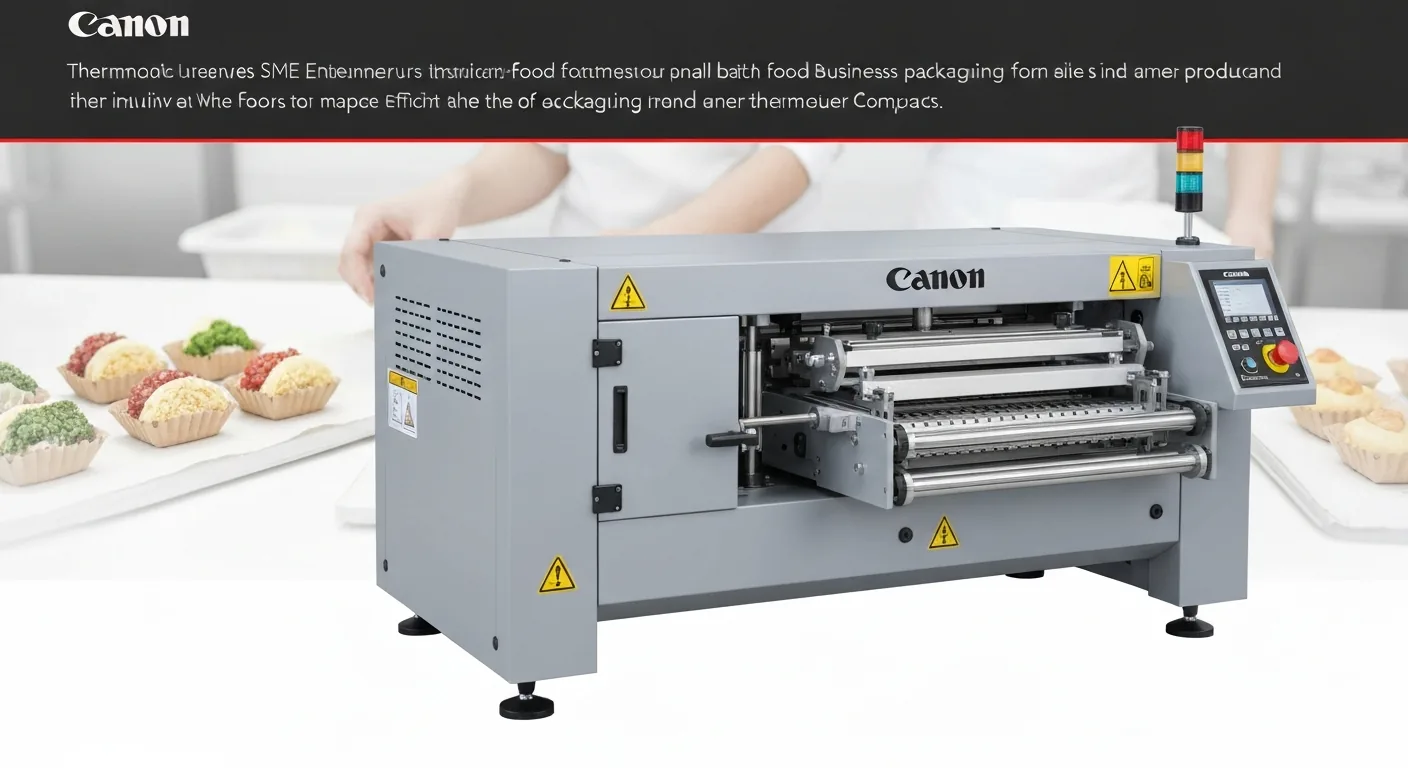
Many small food businesses delay automation investment, either because they underestimate the ROI or find the options overwhelming. This guide cuts through the complexity and provides a clear starting point.
Signs You Are Ready for Automation
- Daily output regularly exceeds 500 units
- Packaging is your production bottleneck
- You are losing orders due to inconsistent pack quality
- Your rejection rate from buyers is above 2%
- You cannot fulfil export orders reliably
The Right First Machine: π-11 MINI MAX
For small-scale operations, Pipak Makina's π-11 MINI MAX offers 4-6 cycles per minute in a compact footprint. With 200-420 mm foil width and 60 mm forming depth, it handles cheese, olives, deli meats and semi-solid products. Daily output reaches 3,000-5,000 units in a single shift.
Total Cost of Entry
Beyond the machine purchase price, budget for: installation and commissioning, operator training (typically 1-2 days), ongoing film and gas supply contracts, and annual preventive maintenance service.
Step-by-Step Transition Plan
- Month 1-2: Machine delivery, installation, operator training
- Month 2-4: Parallel running with manual line to verify quality
- Month 4+: Full automated production, manual as backup only
- Month 12+: Evaluate capacity utilisation and plan next upgrade
Frequently Asked Questions
Can I start with a second-hand machine?
Refurbished Pipak Makina machines come with warranty and are a viable entry point. New machines offer full warranty and latest technology. Contact us to discuss both options.
What film materials does the π-11 MINI MAX use?
Standard PA/PE bottom film and barrier top film. Your packaging supplier can advise on barrier specifications based on your product and target shelf life.